Choose a goal and a setting
Decide what you want to improve: getting up more easily, carrying shopping or performing a familiar movement with greater confidence. For a sporting goal, specify what change you will look for.
Write down where you can train, how much time you have and the equipment available. This rules out options that would be hard to repeat within your schedule.
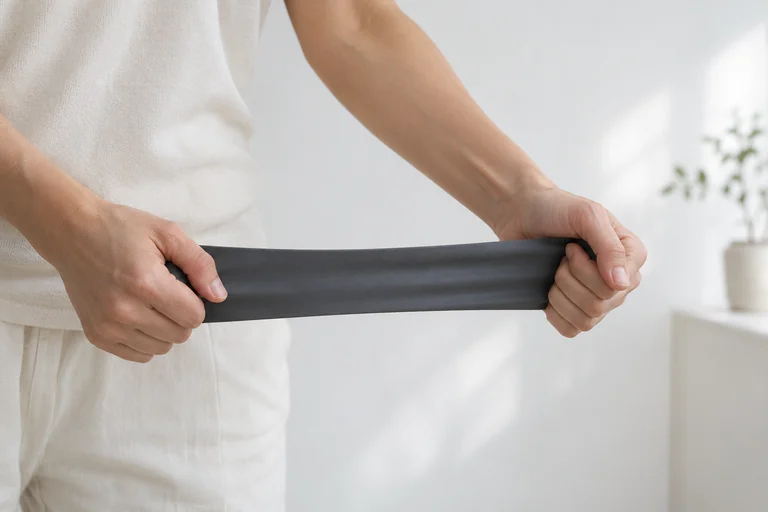
Resistance takes different forms
Strength exercises make muscles work against resistance. A barbell is not the required starting point: bodyweight, resistance bands and machines can serve that role.
The equipment name alone cannot tell you whether a movement suits you. First understand how it is performed, where effort is expected and how difficulty can be adjusted. When the technique is unfamiliar, feedback is more useful than guessing from a short video.2
Prepare for the first session
If the technique is unfamiliar, complete this sheet before speaking with a qualified trainer. With health restrictions, first clarify suitable options with a healthcare professional.
For the movements you choose, specify the range of movement you use. After the session, keep the work actually completed so you can return to it next time.
- My goal
- The everyday task or ability I want to improve.
- My circumstances
- Place, available time and equipment.
- Movements
- Names and variations whose technique I understand.
- Starting point
- Manageable resistance and the work actually completed.
- Next entry
- When I will return to this plan and what I will compare.
Keep changes easy to compare
After a session, record the exercise, resistance, sets and repetitions. These give you a comparison for next time. Changing the movements, equipment, session length and load together makes the difference harder to explain.
Progress can also mean performing the same movement with more confidence. Your own impression of technique is not always reliable. Professional feedback can help you notice whether the task became easier because the movement changed.
Start without testing your limit
You do not have to test a maximum load or take every set to failure in your first session. ACSM guidance does not regard advanced techniques as essential for benefits in the average healthy adult.
Stop an exercise that causes pain or makes you feel unwell. A health condition, injury, recent operation or uncertainty about suitable movements calls for individual advice. An exercise library can provide options to discuss.13